




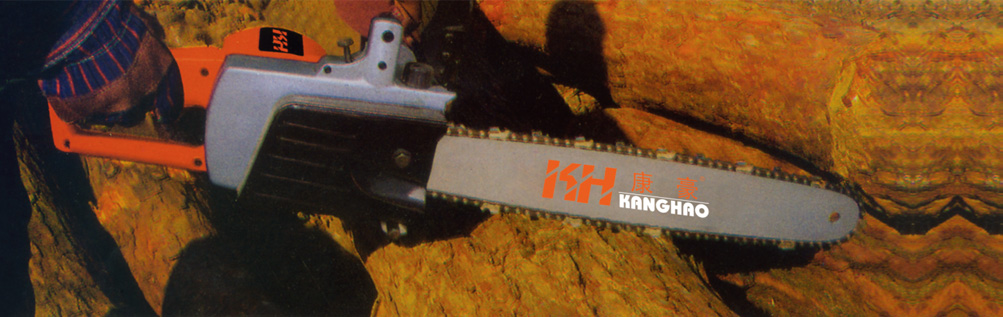

  Handheld electric start type: electric drill, electric planers, electrichammers, circular saws and other handheld power tools. According to protectionagainst electric shock can be divided into three categories:
  The protection against electric shock class I tools not only to rely on basicinsulation, but also have an additional security measures, such as protectiveearthing, make accessible conductive parts in basic insulation damage will notbecome charged.
  The protection against electric shock class II tools not only to rely on basicinsulation, but also contains additional security measures (but no protectiveearth or do not rely on equipment), such as double insulation or reinforcedinsulation. Its basic types are: ①shell of insulating materials, with sturdysubstantially continuous insulation shell II metal shell, it has a basicsequence of metal, using double insulated when using double insulated when not,using reinforced insulation ③ insulation and metal combination.
  Class III tools rely on safety extra low voltage power supply. Called safetyextra low voltage refers to phase line and relatively voltages exceeding 42V,powered by a safety isolating transformer.
  With the extensive use of hand-held electric motor operated tools, electricalsafety is even more important to the fore. Departments shall, in accordance withthe national standard for safety of hand-held electric motor operated tools todevelop appropriate procedures. Its content should contain at least: the allowedrange, the correct use of the tools, procedures, checks before use partsprojects, risks that may arise in the use of protective measures, methods ofstorage and maintenance of the tool, the operator should be aware of. In addition, use, maintenance and repair of safety education and training staff toattach more importance to the supervision of the inspection and maintenance ofhand-held electric motor operated tools, shock-proof moisture-proof corrosion-proof.
  Before use, should share selection of hand-held electric motor operated tools
  General job sites, as far as possible using the type tool. When using the typetool, and should be equipped with leakage protection, isolation transformers. IIor III such tools should be used in moist places, such as the use of class Itools, installation of operating current not greater than 30 μA, movement timeis less than 0.1s protector. When operating in boilers, metal containers, pipes,class III tools shall be used, or fitted with leakage protection class II toolsleakage protector operation current of not more than 15 μA, movement time isless than 0.1s. In special circumstances, such as damp-heat, rain and snow,there is explosive or corrosive gas environment, you should use the tools withthe appropriate degree of protection and safety requirements.
  Installation use, class III tools-safety isolating transformer, class II toolsprotector, ⅱ, ⅲ tool control box and the power unit should be kept away fromthe workplace.
  Power inlet of the tool applying tough rubber envelope or plastic-sheathed wire,there shall be no joints, any extension or removal. Protective earthingresistance must not be greater than 4 ω. When protective cover moving parts may not be demolished, replaced the abrasive should stop.
  In cramped workplaces should have a guardian
  In addition to 36V and below the isolated transformer secondary winding voltage,power supply grounding, power supply circuit fitted with a reliable low-voltageleakage protection outside, the rest are wearing rubber insulating gloves andinsulated shoes to wear when necessary, or standing on insulating mat. Isolatingtransformer should be the original pair of winding, secondary winding shall not be grounded, metal shell and core should be reliable grounding. Terminals should be closed or with shields. Primary winding should be separate fuses, bipolarknife control, wire length should not exceed 3M, there shall be no joints.
  Tools in use before and after the holder, must be checked daily, users shouldcheck before use. Daily inspection contents: casing, handle no damage cracks,mechanical protective devices are intact and tool rotating part is flexible,light and smoothly, electrical protection device is good or not, protect thecable connection is correct and reliable, the power switch is normally flexible,the power plug and the power cord is in good condition. Found the problem should be immediately repaired or replaced.
  Should be checked regularly by full-time staff at least once a year, in humidareas or poor use conditions and temperatures often change places, accordinglyshorten the inspection cycle. The rainy season before check in time, checks inaddition to the checks, the measuring circuit of a 500V Megger insulationresistance of the shell. Use tools when not in use for a long time beforetesting insulation class I tools should be less than 2M, class II tools shall beless than 7M, class III tools shall be less than 1M, otherwise dry processing ormaintenance should be carried out.
  Tool maintenance should be carried out by specially designated ServiceDepartment, equipped with the necessary inspection equipment. Shall not bearbitrarily changed the original design parameters of the tool shall not be less than alternative materials of the original performance, not replace parts thatare inconsistent with the original specifications. Tools within the insulatinggaskets, casing must not leak or arbitrary demolition.
  Maintenance should be measured after insulation and voltage test between liveparts and the shell. By basic insulation and isolation class I tools live partsthe withstand voltage test voltage to 950V, class III tools 380V with reinforcedinsulation charged part isolation class II tools and test voltage of 2800V.
Copyright ©YongKang KangHao Industry & Trade Co.,Ltd . Manage